Travel opens the door to new places, experiences, and adventure. But for travelers with sensory sensitivities, busy transportation environments can sometimes feel overwhelming. Bright lights, crowded platforms, loud announcements, and unexpected changes can quickly add up.
The good news? With a little planning, travel can become a much smoother experience. Train travel, in particular, can offer a calmer alternative to other modes of transportation thanks to predictable schedules, flexible seating, and the ability to move around during the journey.
In recognition of Autism Awareness Month, also known as World Autism Month, we spoke with Andrew Nelson, Ed.D, CCM, Senior Director, Autism Response Team from Autism Speaks about traveling with autism, sensory-friendly travel, and how thoughtful planning can help create more comfortable journeys for everyone. Let’s get started!
A Quick Note on Language
At Pacific Surfliner, our goal is simply to be respectful and thoughtful in how we talk about sensory-friendly travel. Throughout this guide, we may use a mix of terms, recognizing that everyone’s experiences and preferences are different, with diverse needs and requirements for comfortable travel.
What Does “Sensory-Friendly” Mean?
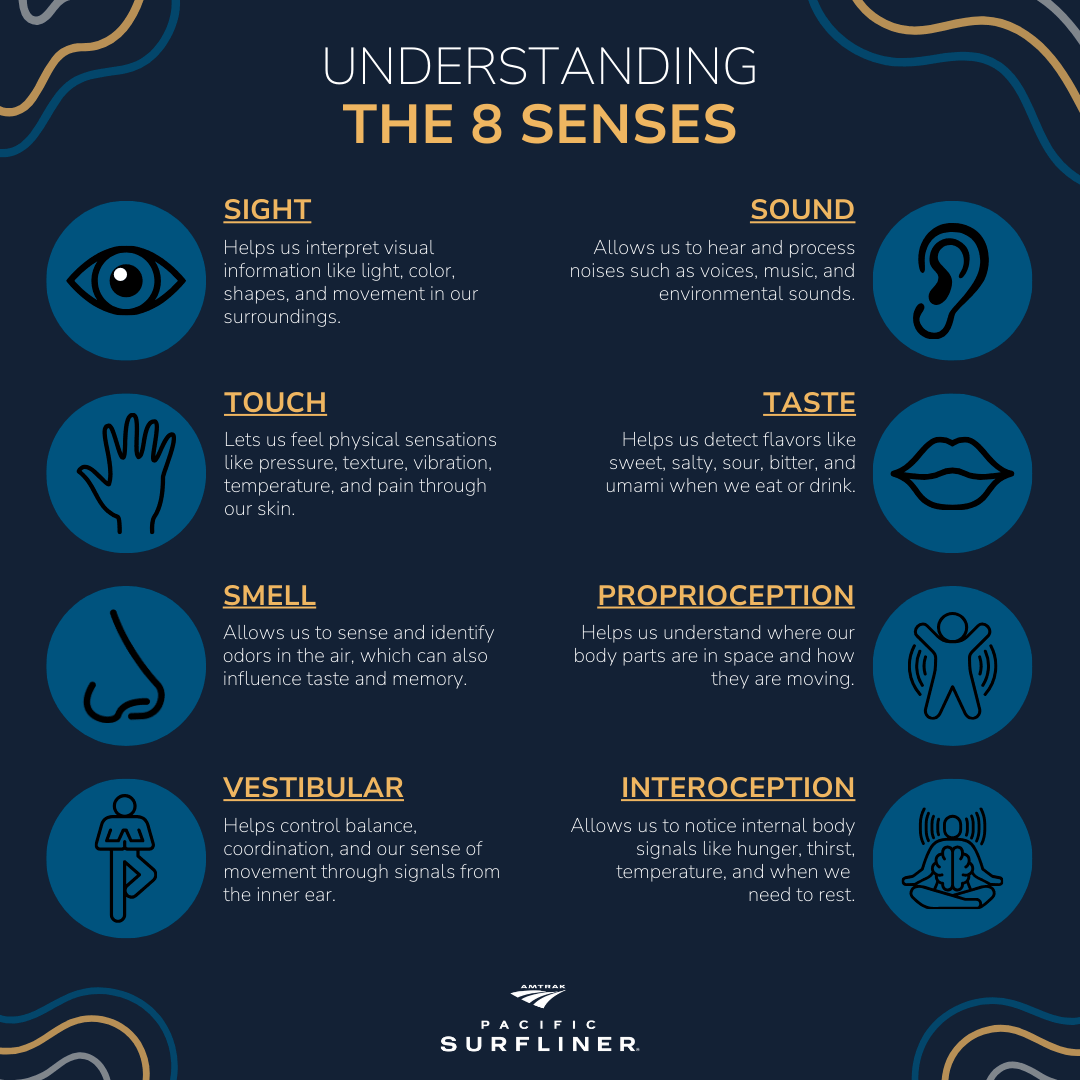
In a nutshell, sensory-friendly travel is all about being aware of how environments can affect our senses. Things that many travelers may not notice, like bright fluorescent lights, bold carpet patterns, loud sounds, and crowded spaces can feel very intense for someone with sensory processing differences.
It makes sense, then, that creating sensory-friendly spaces starts with noticing these details, and softening the harsher edges of an environment.
Many of us learn about the 5 senses in school — you know the ones! Sight, sound, touch, taste, and smell all play their part in how we interpret the world around us. But sensory processing actually involves a few extra ones too:
- Proprioception: Awareness of where your body is in space.
- Vestibular: The inner ear system that helps maintain balance.
- Interoception: Signals that come from inside the body about things like temperature, hunger, or discomfort.
Click here to learn more about autism and sensory issues.
Why Can Public Transportation Be Overwhelming for Some Travelers?
We all know that travel involves a lot of moving parts: getting to the station, waiting to board, navigating crowds, finding your seat, the list goes on and on. These environmental changes create a constant stream of sensory input, even if we don’t fully realize it in the moment.
For travelers on the spectrum or with sensory processing differences, the transitions between these travel environments can be the most difficult part of using public transportation. Each step of the journey introduces a new setting with its own sounds, lighting, movement, and social expectations. One moment you might be in a quiet rideshare, and the next you’re standing on a busy platform with announcements echoing overhead. Constantly shifting between environments like this, with little room for predictability, can make it much harder for the brain to settle and adapt.
COMMON SENSORY TRIGGERS IN TRANSIT ENVIRONMENTS:
Every traveler’s sensory experience is different, but certain elements of public transportation can feel particularly overwhelming. Some common sensory triggers include:
- Loud announcements or mechanical noises
- Bright or flickering lighting
- Crowded platforms or seating areas
- Strong smells from food or cleaning products
- Sudden temperature changes
- Busy patterns on floors or carpeting
- Unexpected delays or schedule changes
However, it’s also important to note that sensory triggers are highly personal experiences. A sound, smell, or sensation that one person barely notices may feel overwhelming for someone else!
Why Train Travel Can Be a More Sensory-Friendly Option
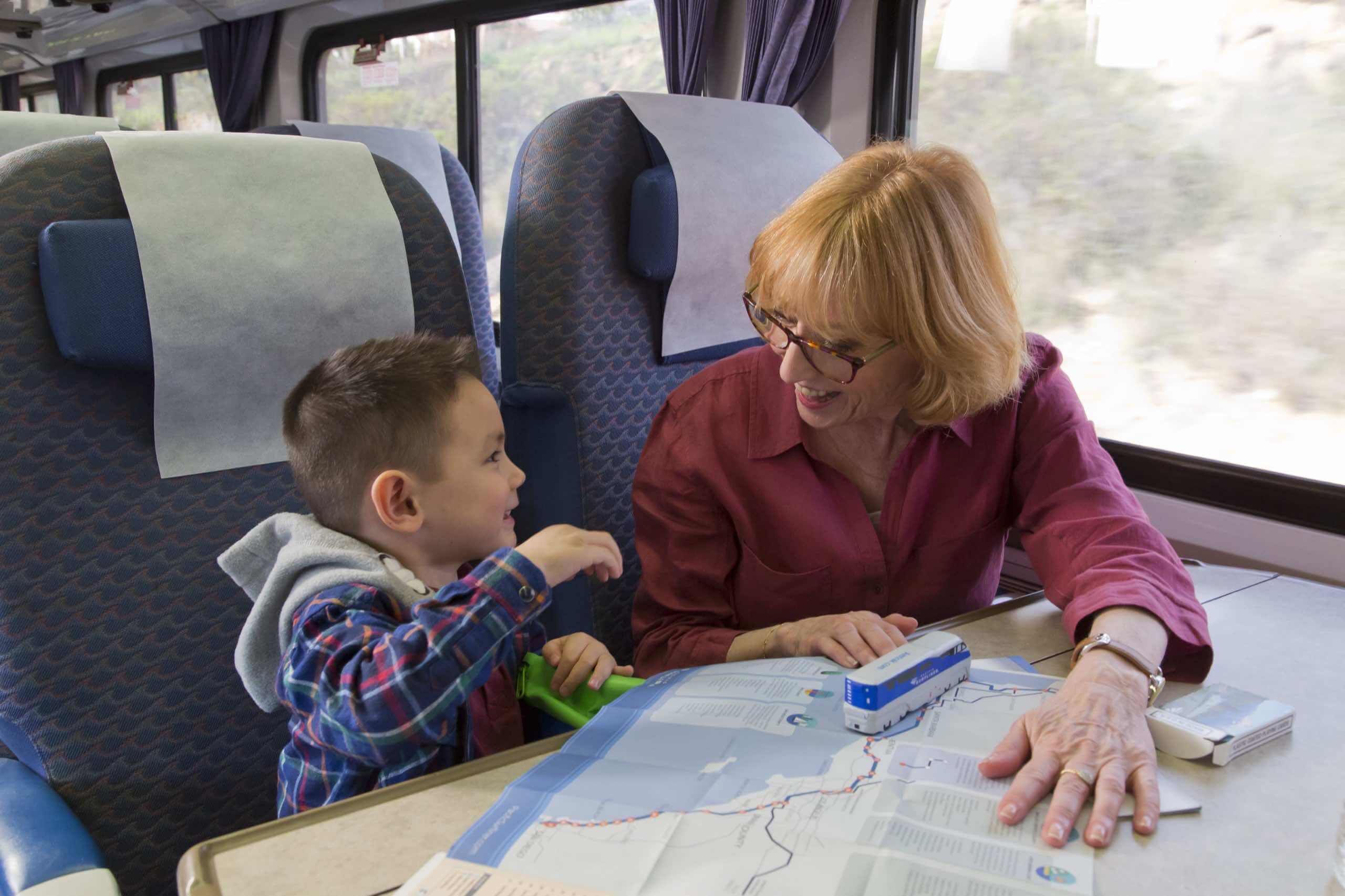
Compared to other forms of transportation, trains offer a little more breathing room than your average car or plane. For one thing, rail travel usually involves fewer steps than, say, flying — no long TSA lines, fewer checkpoints, and a way more straightforward boarding process.
Trains are also often predictable and punctual, which can be especially helpful for travelers who benefit from knowing what to expect ahead of time. This added simplicity can make the experience feel less daunting.
And lastly, trains offer something many travel environments don’t: flexibility. That magic word can be the difference between comfort and dysregulation for someone with sensory processing difficulties. Passengers on trains like the Pacific Surfliner can move around, stretch their legs, change seats, or step into another car if they need a change of scenery.
5 Ways to Make Travel More Sensory-Friendly

If you find yourself feeling overwhelmed while traveling, little things can go a long way when it comes to making your journey more sensory-friendly:
- Build a sensory travel kit
Many travelers find it helpful to bring a small kit to help them manage their environment on the go. Items may include:- Noise-canceling headphones or earplugs
- Sunglasses or a hat to reduce bright light
- Motion sickness bands or medication
- A blanket or weighted item
- Fidget tools or sensory toys
- Cooling fans or heat packs
- A favorite comfort item, like a plush toy
- Paper or drawing tools for calming activities
- Take a moment to assess the environment
When you first settle in, it can help to pause, take a deep breath, and notice what’s around you. This can help you make simple adjustments— like putting on headphones or choosing a quieter seat if it’s too loud— before sensory input starts to build up. - Plan ahead for transitions
Planning ahead for transitional periods can make them feel less stressful in the moment. Checking schedules ahead of time, arriving early, and reviewing station layouts can help create a smoother flow when you’re heading from one step of your trip to the next. - Travel during quieter times
If your schedule allows, traveling during off-peak hours can greatly reduce crowds and noise levels. Pro tip: Midday and midweek trains are often calmer and less crowded compared to busier commute times. Fridays and Sundays are typically the busiest travel days on the Pacific Surfliner train! Click here to read more about planning ahead with us. - Give yourself room to move
Movement can be extraordinarily helpful for regulating sensory input. And good news: train travel allows you to stand, stretch, or walk between cars whenever you need a change of pace!
Click here for 10 helpful tips on traveling with autistic children.
Preparing for a First Train Trip

If you’re new to train travel, never fear! We’re here to help, and a little preparation can make your journey feel a lot more comfortable. Some travelers find it helpful to preview the journey ahead of time— watching videos of train rides, reviewing photos of stations, or even visiting a station in advance.
Practicing parts of the experience, like boarding or navigating the platform, can help make the environment feel more familiar when travel day arrives.
How Fellow Passengers Can Help During Sensory Overload
Often, the best support during sensory overload is simply patience and understanding. If you notice someone who appears overwhelmed, a calm and respectful response can make all the difference. Here are a few simple steps you can take to assist someone experiencing sensory difficulties:
Stay calm
Take a deep breath yourself and stay centered.
Give space
Allow the person time to self-soothe.
Look for a caregiver or ally
Someone traveling with them may already be helping.
Offer simple support
Use clear, calm language: “I’m here if you need help.”
Model patience for others
Encourage understanding rather than judgment.
Conclusion
Making travel more sensory-friendly helps create a better experience for everyone on board. When spaces are designed with flexibility, comfort, and understanding in mind, everyone enjoys a smoother journey!
The Pacific Surfliner train is a relaxed and endlessly flexible way to explore Southern California. Whether you’re heading out for a day trip or a weekend getaway, we’ll help you settle in, take in the coastal views, and enjoy the ride in any way that feels comfortable for you.
We can’t wait to see you on your next ride with us! Click here to plan your trip.
ADDITIONAL RESOURCES:
- Information on Traveling with Autism
- Tips for Traveling with Autistic Children
- Breakdown of Sensory Issues
- Autism Speaks FAQs
- Autism Travel Organization
- The Autistic Traveler Blog
FAQs: Sensory-Friendly Travel
What makes train travel sensory-friendly?
Train travel can feel more sensory-friendly because it often involves fewer steps than flying and offers more flexibility once onboard. Travelers can move around, adjust seating, and manage their environment more easily during the journey.
Are trains easier than planes for sensory-sensitive travelers?
For some travelers, trains can feel easier than planes because the travel process is often more predictable and involves fewer transitions like security lines and boarding procedures. The ability to move around and adjust your environment can also make train travel more comfortable.
How can travelers reduce sensory overload?
Travelers can reduce sensory overload by planning ahead and bringing tools that help regulate their environment, such as headphones, sunglasses, or comfort items. Choosing quieter travel times and making small adjustments early can also help prevent sensory input from becoming overwhelming.
What should you plan before traveling with autism?
Before traveling, it can help to review the steps of the journey, check schedules, and familiarize yourself with the station or train environment ahead of time. Bringing a sensory kit and allowing extra time for transitions can also make the experience smoother.
What accessibility features help autistic travelers?
Helpful features may include clear signage, predictable schedules, flexible seating, and the ability to move around during the trip. Staff assistance and accessible spaces can also help travelers feel more supported and comfortable while navigating the journey.